From Dr Thomas Hale, author of Medications and mother's milk
"I've also been asked by a couple of mother about breastfeeding and
melamine. This is what I've replied.
No one knows the correct answer to this because here has been no
research done on melamine and breastfeeding. Thus all anyone can do is
give an educated guess. Research, however,shows consistently that even
in a polluted world, breastfeeding offers advantages that outweigh the
risk of ingesting possible contaminants. Indeed, the benefits of
breastfeeding may prove to be essential to compensate for and outweigh
the risks of toxic effects from the environment. In other words even
when small amounts of toxins get into the breast milk medical problems
are not found in the babies.
For example breastfeeding helps to diminish toxins bad effects. Here
are some facts:
Toxins increase the risk of developing some cancers. True, but the
evidence shows that breastfeeding babies have a lower risk of some
cancers than artificially fed babies.
Toxins may interfere with neurological function and learning abilities.
True, but the evidence shows that children who were breastfed do better
on neurological and intelligence tests than artificially fed children,
and the longer they are breastfed, the better they do.
Toxins may interfere with immunity. True, but the evidence shows that
infants who are breastfed have better and more mature immunity than
artificially fed infants, and that this better immunity carries on much
longer than the length of time the infant or child is breastfed.
I hope this puts your mind at ease and you can continue to enjoy your
breastfeeding relationship."
Thursday, September 25, 2008
Melamine and breastfeeding

Thursday, September 18, 2008
Tainted milk kills babies in China
It is such a tragedy that so many babies in China have been affected by the tainted milk powder. While the parents, companies and government point fingers and argue, where is the mention of BREASTFEEDING? Where is the talk of the reasons so many babies are not getting milk from their own mothers?
I wish the headlines of the newspapers in China (and the rest of the world) would read
BREASTFEEDING: THE ONLY SAFE WAY TO FEED YOUR BABY
Why risk your baby's health?
Why would you NOT breastfeed?
Can you really trust ANY milk manufacturer more than your own breasts?
Friday, August 29, 2008
Feeding frenzy from The Guardian 27/8/08
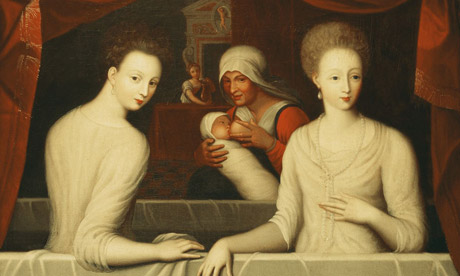
Interesting article from the Guardian newspaper on the importance of human milk vs cow's milk formula. Should babies receive another mother's milk if they can't receive it from their own mother?
Why not?
Feeding Frenzy
Kate Garraway's revelation that she would feed her child another woman's breast milk has caused a furore - some people have called it repulsive. But given the health benefits, asks Joanna Moorhead, why all the fuss about wet-nursing?
Joanna Moorhead
Wednesday August 27 2008
The Guardian
At the weekend, GMTV presenter and mother of one Kate Garraway admitted that
she used to think that feeding other women's babies sounded pretty strange;
"a bit icky", was the way she would have described it. But making a Channel 4 documentary on the subject, and meeting women in the UK and US who had fed other women's offspring, she was prompted to rethink the entire debate. "Why are we happy about giving [our babies] something from a cow's breast, which is another species?" Garraway asked bullishly in a Guardian interview on Saturday. She continued to say that it was, in fact, "bonkers" to feel that letting your baby ingest another woman's
milk is beyond the pale, while being happy to let that same baby ingest cow's milk - "which is what formula milk is".
But many people still feel that babies receiving sustenance from any woman
other than their mother is deeply worrying and suspect. Among those who have
commented on the subject online over the past few days are a number of people
who have pronounced themselves "uncomfortable" at the notion. One mother I spoke to told me she felt "repulsed" at the idea of giving her milk to another baby, or having her baby fed with what is, after all, another woman's bodily fluid. Others feel that it could be psychologically undermining. "I think it would make me feel inadequate," says one friend. "There's so much pressure on you to breastfeed. If you find it
difficult, and ask another woman to do it for you, that would just reinforce the
inadequacy you're already feeling." I must admit that, the one time I tried swapping babies with a close friend, feeding her little boy felt weirdly intimate. The baby was hers, not mine: being in such close contact with him felt odd. His suck didn't feel anything like my baby's suck, and the whole experience made me feel a bit uncomfortable.
Alongside the detractors are those who find the idea perfectly normal.
"The words teacup and storm spring to mind," said a contributor to one
blog. Another pointed out that breastfeeding a child who wasn't your own was
once considered perfectly acceptable, with wet-nursing widespread just a few
hundred years ago. And while there's every reason to have been perturbed by
the class relationships that defined that practice in the west - working-class
women feeding the children of the upper classes - it could be argued that the
sharing of the breast milk itself wasn't actually such a problem. The reality is, kneejerk reactions apart, that research paper after research paper extols the health virtues of breast over formula milk. A baby who receives breast milk is less likely to suffer respiratory infections, gastroenteritis, urinary tract infections, ear infections or eczema. He or she is less likely to be overweight as a teenager and adult, is less likely to develop diabetes, and is likely to have a higher IQ. The list seems endless : so is the supplier really so important, provided the baby is receiving breast milk?
Among infant feeding professionals this current controversy is being met with a
guarded response. Many of those I spoke to had been approached by the makers of
Garraway's Channel 4 documentary but had declined to take part, fearing that - as happened with a similar documentary two years ago, focusing on mothers who breastfeed children as old as eight - the result would be a film that highlighted the crackpot and the batty, rather than the mainstream issues.
Alison Baum, of the breastfeeding charity Best Beginnings, expresses a typical
view. "There is value in making clear, as Garraway does, that formula is based on cow's milk - I think a lot of people don't realise that, and it does have mplications ... cow's milk is made to feed big baby calves, and we're giving it to tiny human infants. But there's a difference between acknowledging that there's an issue here, and seeing wet-nursing as the solution - I don't think that's the answer at all.
"What it's all about, for me, is shifting the pressures off individual women and on to society, so mothers themselves don't feel the weight of the debate so much. What I want to do is make it possible for mothers to go on breastfeeding for as long as they want to - because, at the moment, far too many women are stopping earlier than they would like."
Insiders say that some of Garraway's comments are misinformed, as well as naive. At one point in the Guardian interview, she says that despite her views having changed, she doesn't feel she'd be able to deal emotionally with another woman feeding her baby. So, she says, if the circumstances arose she'd simply buy human milk for her baby - from a milk bank.
What can she mean, asks Janet Fyle, professional policy advisor at the Royal College of Midwives. I suggest that maybe she's imagining that she'd call up one of the country's 17 milk banks, located at hospitals across Britain, credit card at the ready. Fyle snorts with laughter. "Is that what she means? Bless her!" she chuckles. Milk banks - which dwindled through the 1980s at the height of the Aids furore, but are now making a comeback - are specifically designed for the feeding of the tiniest premature babies in special-care baby units. These babies weigh as little as 2lbs, and have minute stomachs, so they need to be tube-fed a few millimetres of donated breast milk every few hours through a tube.
"It's a totally different ball-game from feeding a growing baby at term and beyond," explains Sally Inch, coordinator of the Oxford Human Milk Bank and infant feeding specialist for the Oxford Radcliffe Trust.
"A normal-size newborn would need something in the region of three-quarters to a litre a day of milk. It simply wouldn't be practical - and, more importantly, it's not what breast-milk banks exist to do."
What they are set up for, Inch explains, is to give premature babies the only milk they may be able to absorb - the gut of a pre-term infant is often too immature to tolerate any kind of formula. So do mothers of premature newborns ever get squeamish about their babies being given other mothers' milk - albeit after careful screening and pasteurisation? "That's certainly not a major problem," says Inch. "This milk can be life-saving - it's the best way of protecting against a condition called necrotising enterocolitis, which kills one in five premature babies who contract it. Who would mind their baby being given something that's going to save his or her
life?"
A much more common problem, she points out, is that milk banks don't have enough milk to meet demand, especially with premature birth on the increase. Women who donate milk have babies under six months old themselves - they usually collect a small amount of milk from each breast after each feed, and then freeze it to give to the milk bank later.
But what about modern-day, mouth-to-nipple wet-nursing - does it really go on,
behind closed doors? Fyle thinks it probably does. From time to time, she says,
the Royal College of Midwives gets an inquiry from someone who wants to know if
there are risks involved. (Since women are screened for conditions such as HIV
and hepatitis during pregnancy these days, there doesn't tend to be a huge health risk. If a woman is feeding her own baby, she's almost certainly no great risk to yours.) "There are probably situations in which women help one another out by feeding each other's babies," she says. "It happens all the time in Africa, and it happened all the time in the past in the west. But as far as the future is concerned, in the west, I don't think it's going to make a big impact - although I am a bit worried about the possibility of it happening for gain. I feel there are mothers out there who don't like the idea of using their own breasts for feeding, but feel for
health reasons they'd like their child to have breast milk. I wouldn't rule out a bit of a growth in wealthy women looking for women they could pay to feed their babies," she pauses. "I do find that disquieting."
The reality, though, is that while this may occasionally happen, the current furore says a lot more about the media interest in the extremes of human behaviour than it does about real issues around breastfeeding. Right now, only 2% of British babies are being exclusively breastfed to six months, as per official government advice. As far as I know, no one's making a documentary about that.
Copyright Guardian Newspapers Limited 2008
Tuesday, July 29, 2008
World Breastfeeding Week, 1-7 August 2008

This year’s theme established by the World Alliance for Breastfeeding Advocacy (WABA) is: “Mother Support: Going for the Gold.” ILCA has added the tag, “Everyone Wins When Babies Breastfeed” as a reminder that we ALL play a role in providing the support new mothers need to meet their breastfeeding goals. 
In conjunction with the Olympics in August 2008, WBW 2008 calls for greater support for mothers in achieving the gold standard of infant feeding: breastfeeding exclusively for six months, and providing appropriate complementary foods with continued breastfeeding for up to two years or beyond. La Leche League International, a founding member and Core Partner of the World Alliance for Breastfeeding Action (WABA), is celebrating World Breastfeeding Week (WBW) through its La Leche League (LLL) Leaders and LLL Groups around the world. LLLI has a current presence in 68 countries.
See more at
Wednesday, June 25, 2008
Tokyo Spin shell TV interview!
Information on having babies in Tokyo, with a 3 minute cameo starting at 2:42 by yours truly...they spliced the interview so that the second half of what I said comes before the first... I was joking around a lot at the end of the interview, but the way they spliced it, looks like I was not taking my subject seriously right from the start!!
Enjoy!
Or youtube here.
The full article accompanying this is also online here
Part One of the Expecting in Tokyo video is here:
Thursday, June 19, 2008
In memory of Edwina Froehlich

From Hathor the Cowgoddess.
http://www.thecowgoddess.com
Edwina Froehlich was one of the 7 Founders of La Leche League. She passed away at the beginning of June after a long and wonderful life. For more details, please see http://www.llli.org/edwina.html
You can donate to the special LLL memorial fund via a link on that page, or leave a comment for her family. Without Edwina and her co-founders starting LLL all those years ago, many of us would not be the parents we are today. The influence LLL has had on my own life, my kids lives, and the lives of so many other mothers and babies, is profound.
Here is the information in Japanese.
エドウィナ・フローリック
ラ・レーチェ・リーグ創設者の1人
1915年1月5日 ― 2008年6月8日
ラ・レーチェ・リーグ創設者の1人、エドウィナ・フローリックが2008年6月8日
(日)、脳梗塞により他界しましたことを謹んでご報告申し上げます。エドウィ
ナはアメリカ、イリノイ州、インバーネスの出身で、200万以上の販売部数があ
るTHE WOMANLY ART OF BREASTFEEDING (日本語版『だれでもできる母乳育
児』)の共著者でもあります。
1956年、エドウィナを含む7人の創設者はイリノイ州のフランクリン公園で集
い、自信を持って母乳で育てられるように役立つ情報を分かち合いました。それ
から間もなく、たくさんの女性がこのグループに関心を持ち、非営利のボラン
ティア団体としてラ・レーチェ・リーグが組織化されたのです。
生前のエドウィナのエピソードをご紹介いたします。
「その当時は、“乳房”という言葉を活字で目にしない時代でした。報道機関に自
分たちの団体名を知らせるときのことを考えて、私たちが何の活動をしているか
わからない名称を選ばざるを得ませんでした」
そこで、創設者たちは団体名にスペイン語の“ラ・レーチェ(乳)” という言葉
を使うことにしました。それが草分け的な存在となり、ラ・レーチェ・リーグが
スタートしたのです。そして今やアメリカ国内すべての州と、日本を含めて世界
68カ国で活動を続けています。
THE WOMANLY ART OF BREASTFEEDINGは、これまでに8ヵ国の言葉に翻訳され英語
点字版も入手できます。また、その日本語版『だれでもできる母乳育児』も、皆
さまより根強い支持をいただいています。
もう1人の創設者、ベティー・ワグナー・スパンディコーはエドウィナにはじめ
て出会ったときのことを、次のように語っています。
「私はエドウィナの考えすべてに賛同しました。その一言ひとことにうなずき、
熱心に聞き入ったのです。はつらつとした姿にすっかり魅せられました」
エドウィナはラ・レーチェ・リーグ理事会のメンバーで、今までに何度かセクレ
タリー、会計、副議長の役職に就きました。また1956年から1983年まで、理事長
秘書を務めています。ほかの創設者の話によると、エドウィナは、どのようなこ
とでも最後まで成し遂げる精神の持ち主であったということです。ラ・レー
チェ・リーグで困難な状況にあったとき、エドウィナは次のように語りました。
「こんなことで、くじけないでおきましょう。皆で協力して乗り切り、うまく対
処しながら少しずつ解決すれば、私たちの本当の使命に取り組めます。私たちの
使命はほかのお母さんが満足のいく母乳育児をできるようにサポートすることです」
エドウィナはアメリカ、ニューヨーク州、ブロンクスのハーン家で、1915年1月5
日に生まれました。イリノイ州、シカゴのマンデュレン大学を卒業後、ジョン・
フランシスと結婚、3人の子どもに恵まれました。夫が1997年に亡くなってから
は、3人の息子、ポール、デイビッド、ピーターと、その3人の妻、そして9人の
孫に支えられて、その後の人生を過ごしました。
ラ・レーチェ・リーグ日本で活動する105人のリーダーと世界各国の約9000人の
リーダーは、 「1対1の人間的なあたたかみを大切にしながら、お母さんが
お母さんを援助する」という心のこもった母乳育児サポートに大きく貢献したエ
ドウィナの訃報に接し、深い悲しみに包まれています。 7人の創設者から私
たちが受け継いだ、母乳で育てたいお母さんを援助するという使命を、これから
もいっそう熱意を持って果たしていく所存です。
なお、8月23日と24日に東京で開催予定の第2回エリア・コンファレンス2008に
は、創設者の 1人、メリー・アン・カーウィンを来賓として招いています。半
世紀にわたる母乳育児支援の歴史を持つ、ラ・レーチェ・リーグからの最新情報
を得て、温かい励ましの精神を感じていただきますように、皆さまの参加を心よ
りお待ち申しあげております。
ラ・レーチェ・リーグ日本
Monday, June 02, 2008
Ending breastfeeding
When should breastfeeding end?
Should it be dictated by the baby's age?
Should it be dictated by the baby's teeth?
Should it be decided by the baby's grandmother?
Should it be decided by your doctor?
Should it end because a particular book says to wean?
Should it end because a particular friend says to wean?
Who decides when a relationship ends?
Because that is what breastfeeding really is: a warm, loving, nurturing relationship between a mother and her baby. It is much more than just food. Listen to your baby and listen to your heart. If you are enjoying breastfeeding and if your baby is enjoying breastfeeding, there should be no rush to end it, least of all to satisfy outsiders.
Breastfeeding doesn't make you tired, it makes you release hormones that help you relax and do your job as a mother. It makes you stop and focus on your baby.
Breastfeeding doesn't tie you down, it makes you able to feed your baby anytime, anywhere. And it's a special thing that ONLY YOU can do for your baby.
Breastfeeding is what babies are supposed to do. Ask yourself if what you are doing right now is more important than nurturing your little baby? And if you weren't breastfeeding, what would you be doing with your baby right now? Sitting on the sofa cuddling? Lying on the bed stroking your baby's hair? Talking to your baby in your arms?
